# Print
Papers as PDF: what goes in one, how it looks, and how we build it. Part of the [SoR design system](README.md).
## Make one with your agent
Paste this into your AI agent, in whichever repo you're working in, and fill in the brackets. It typesets the final text as a PDF with the [Typst pipeline](#process) and gives you the PDF and the marked-up Markdown.
```text
Make the PDF of [the paper] for Seeds of Renaissance. The text is in [path to the
Markdown or document]; the figures are in [path], the cover art is [path, or none].
Use the Seeds of Renaissance design system: the roadmap is AGENTS.md in
~/src/life-itself/design/projects/sor-design-system (or, if that folder isn't there,
https://design.seedsofrenaissance.org/AGENTS.md). Follow its "Paper" route and
read only what it names. Don't change anything in the design repo.
Give me the PDF and the paper's Markdown as you marked it up. Ask me for anything
you need that you can't find. Then tell me what you checked and what you guessed.
```
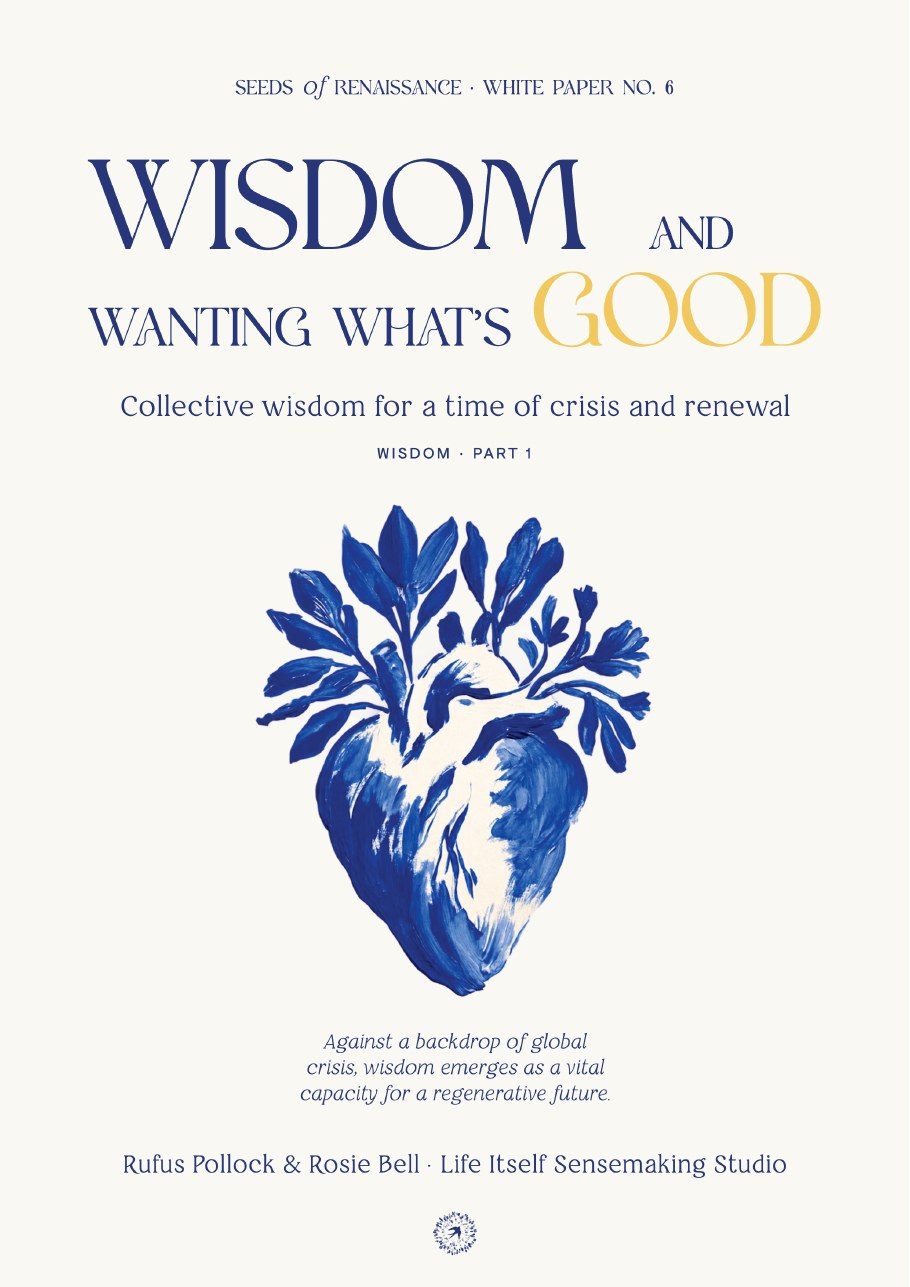
**The Wisdom paper page by page: [Print examples](examples/print/index.html).** The whole thing: [the PDF](https://secondrenaissance.net/assets/wisdom/wisdom-and-wanting-whats-good.pdf).
## The look in one paragraph
Typeset, not word-processed. One A4 PDF, read on screen, white pages. Bricolage for the text, spaced paragraphs on a 118mm measure; Restora for section heads, quotes and epigraphs; Polyamine only for the cover, title page, contents and chapter titles; Apfel for running heads, folios and labels. Chapters open with a woodcut. Figures sit bare on the page. Red only for links and note marks. The back cover is the one night.
## Process
How a paper goes from finished text to a PDF and a web page. Read this first if you're briefed to build one.
A paper should read as typeset and crafted, not word-processed, on paper and on screen. One text, marked once, gives every output: the PDF, the web page, the launch images.
### Three layers and a pipeline
| Layer | Question it answers | Where it lives |
|---|---|---|
| **Design system** | What does it look like? Colours, faces, components, what a pull quote or summary box looks like | This system: [colour](colour.md), [type](type.md), [components](components.md), [diagrams](diagrams.md) |
| **Paper anatomy** | What is a paper made of, and in what order? Title page, imprint, contents, chapters, back matter; how often a pull quote may appear | [Anatomy of a paper](#anatomy-of-a-paper), with [examples](examples/print/index.html) |
| **Editorial craft** | Given this text, what do we pull out and emphasise? Standfirsts, pull quotes, summary boxes, epigraphs, emphasis | A skill in [`pdf-report-publishing`](https://github.com/life-itself/pdf-report-publishing) (`skills/pdf-report`, step 5) |
| **Pipeline** | How do marked text and a style become a PDF or a page? | Typst, in `pdf-report-publishing` |
Take a pull quote. The design system says how it looks and how often it may appear. The craft says which sentence to pick: verbatim, 12 to 30 words, a claim. The pipeline turns the mark into a page.
### Steps
1. **Final text in Markdown**, one master per paper (for 2R papers, `2rbook//essay.md`); title page, imprint and back-cover fields live only in its front matter.
2. **Editorial pass**: mark summary boxes, epigraphs and pull quotes, using the editorial craft skill. If the authors already marked summaries and quotes, add only the obvious.
3. **Figures**: redraw in house style and sign them ([Diagrams](diagrams.md)).
4. **Cover**: plain typographic by default; a paper with its own art gets a bespoke cover, designed from the art and built as HTML ([below](#covers-and-credits)). Promo crops come from the art, not from the cover.
5. **Render** with Typst in [`pdf-report-publishing`](https://github.com/life-itself/pdf-report-publishing): `typst/build-paper.sh `. The PDF follows the anatomy in the `sor` style, with the cover as page 1. The `sor` style takes its sizes from the `--print-*` tokens in `system/tokens.css`; change a value there, then rebuild.
6. **Check** against the [anatomy](#anatomy-of-a-paper), the [examples](examples/print/index.html), the front matter and the list at the end.
The PDF is published with the paper (for 2R papers on secondrenaissance.net, with the web page), not kept here. Then publish and announce: for 2R papers, see `2rbook/docs/publishing-a-white-paper.md`.
Every value below is in `system/tokens.css` (the `--print-*` tokens).
## Anatomy of a paper
In order. Every part starts on a new page; no blank pages.
| Part | Holds | Optional |
|---|---|---|
| Front cover | Series line, title, subtitle, part line, credit ([below](#covers-and-credits)) | |
| Title page | Series line, title, subtitle, part line, authors, the Life Itself credit in text. No logo, no art, no blurb | |
| Imprint | Small print at the foot, the rest empty: a line about the series, edition, version and publisher, authors, acknowledgements, credits (figures, woodcuts, typefaces), copyright and licence (CC BY 4.0), how to cite, URL | |
| Summary | The paper in a few paragraphs | yes |
| Contents | Sections with page numbers, ideally a one-line summary under each | summaries |
| Preface | Where the paper sits in the series and why it was written | yes |
| Introduction | Unnumbered; arabic page numbers start here (front matter in roman) | |
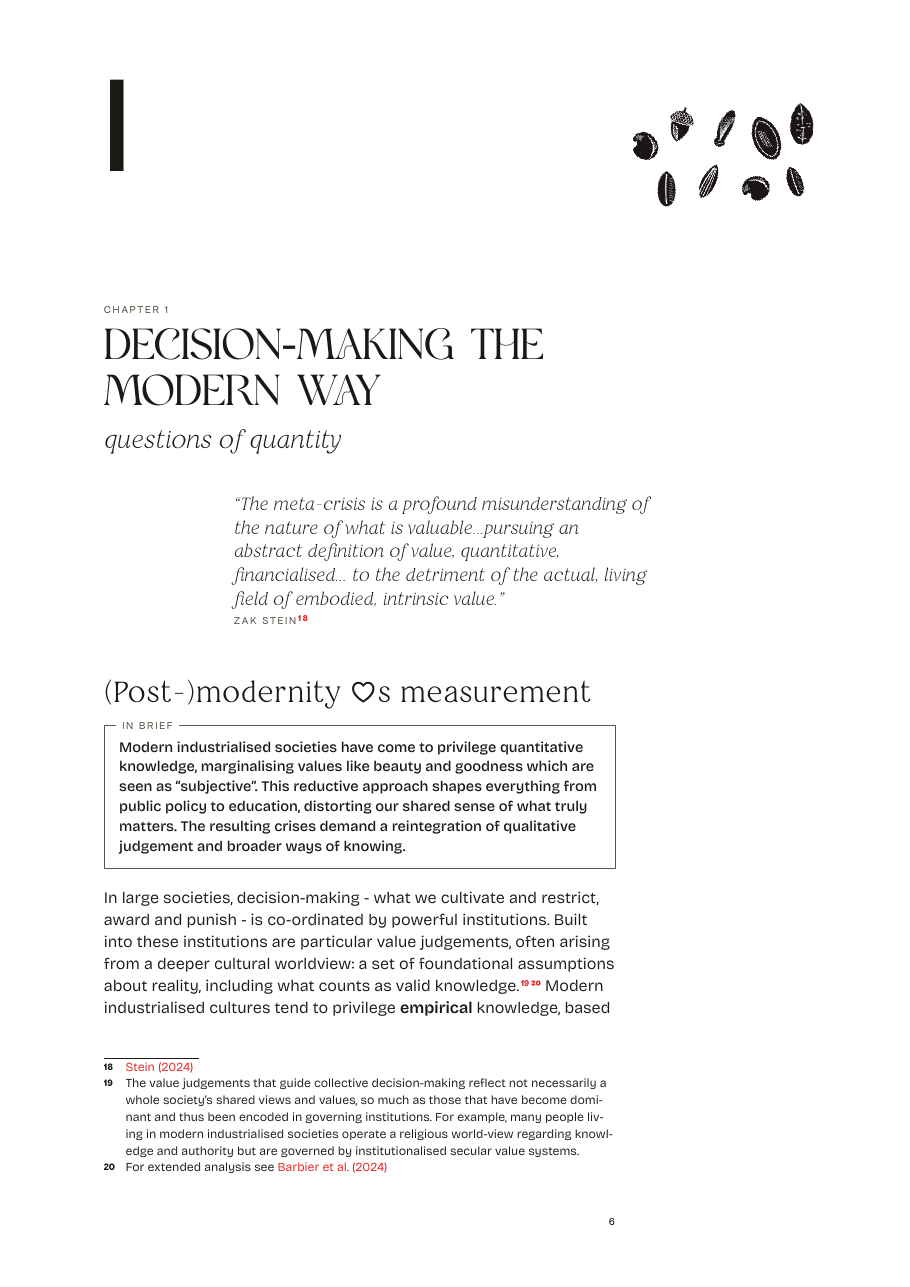
| Chapters | Numbered. Opening: number, title, woodcut, epigraph, then the first section and its summary box. Body: running heads, footnotes, figures, quotes | epigraph, summary box |
| Conclusion | Unnumbered | |
| Further reading, bibliography, appendices | Each on a new page | further reading, appendices |
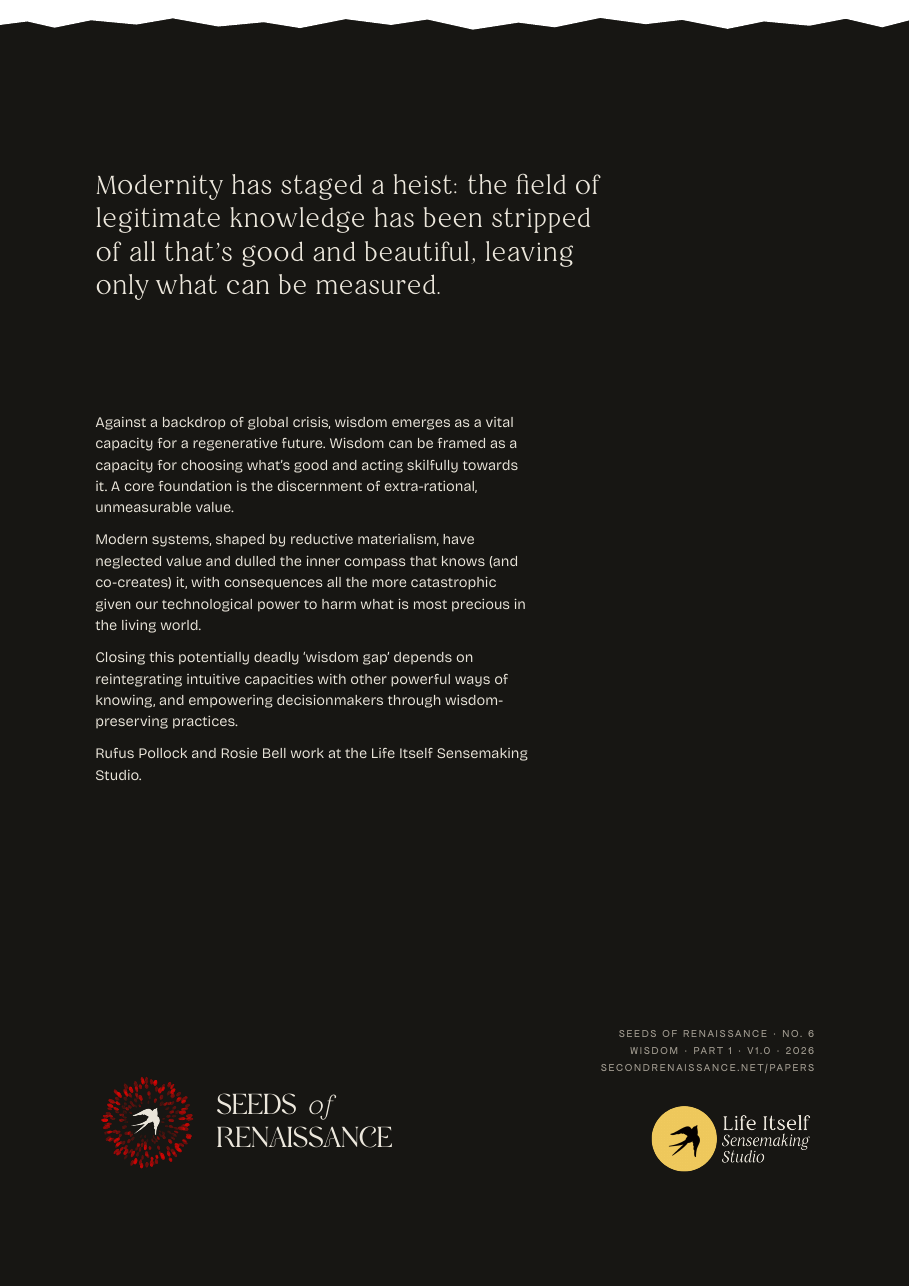
| Back cover | The one night: a hook line, about 120 words on what the paper argues, the inverted mark with the wordmark, the colophon (series, part, version, year, URL), the Life Itself Sensemaking Studio logo | |
## Type and page
A4, white, no fill. Margins 22mm top, 26mm bottom, 24mm and 20mm sides; text 118mm wide (about 70 characters).
| Role | Face | Size |
|---|---|---|
| Cover title | Polyamine | 46pt |
| Title page, contents, chapter titles | Polyamine | 30pt |
| Section head (`###`) | Restora, sentence case | 19pt |
| Sub-section head (`####`) | Restora medium | 14pt |
| Subtitle, standfirst | Restora | 13pt |
| Displayed quote | Restora italic | 15pt; past about 60 words, 11.5pt |
| Epigraph | Restora italic | 11.5pt |
| Body | Bricolage, light | 10.5 on 14.5pt |
| Summary box | Bricolage medium | 9.5pt |
| Caption | Bricolage | 8.5pt |
| Footnotes | Bricolage, numbers in Apfel | 8 on 11pt |
| Running head, folio, figure number, labels | Apfel, uppercase, tracked | 7pt |
## The elements
- **Running heads**: the same on every page, across the text column: the paper's title at the left, the chapter and folio at the right. None on the title page, imprint, contents and chapter openings; openings carry the folio at the foot.
- **Paragraphs** spaced by half a line, not indented.
- **Emphasis** in the body: an oblique Bricolage (the upright slanted 11°), for titles of works and a stressed word. Bricolage has no italic.
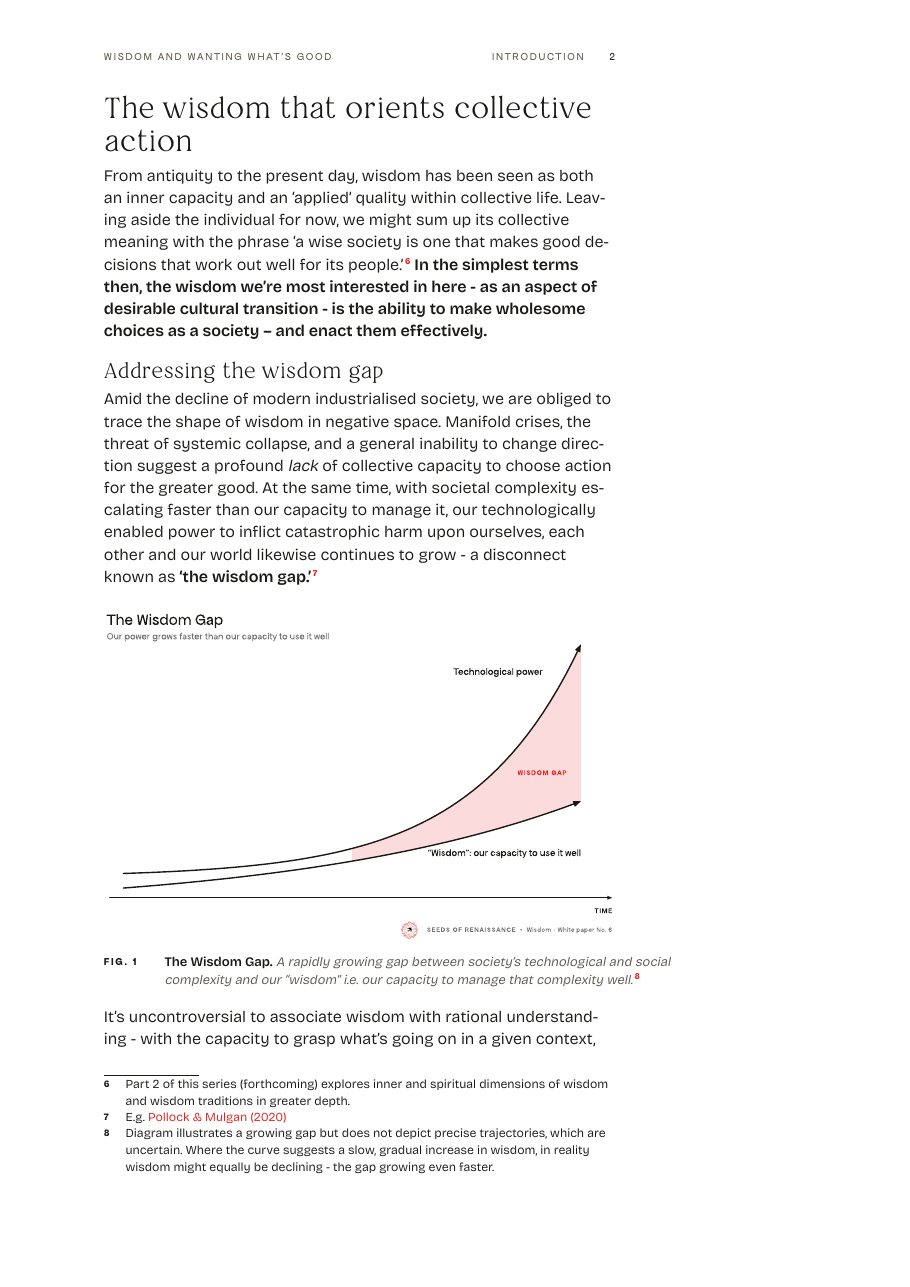
- **Figures** sit bare on the page, the width of the text column, at its left edge; cropped to their drawing; then "Fig. 1" in Apfel and a caption. They carry their own signature ([Diagrams](diagrams.md)).
- **Quotes**: displayed in Restora italic, the source below in Apfel.
- **Summary box** ("In brief"): a 0.4pt rule in `--muted`, the label set on the rule.
- **Footnotes** numbered from 1 in each paper, linked both ways.
- **Tables**: 8.5pt between hairlines, header row semibold, no fills.
- **Woodcuts** open chapters and may sit on the cover.
- **Red** only for links and note marks. No pale yellow, no tint on pages.
## Covers and credits
Which mark goes where: [Logo](logo.md#which-mark-where).
- **Papers are the Seeds of Renaissance series**, numbered on from the Second Renaissance series (*Wisdom and Wanting What's Good* is No. 6).
- **Front cover, top to bottom:** series line ("Seeds *of* Renaissance · White Paper No. 6", small, in the wordmark face, "of" in Fraunces italic); title; subtitle; part line if any ("Wisdom · Part 1", small); the art at full size; optional one-line blurb, smaller than the credit; authors with the Life Itself credit, one line, one size; optionally the one-colour mark, small, centred at the foot.
- **Keep it simple.** Start from art, title, series line and credit; add the rest only if needed.
- **Plain typographic cover** when a paper has no art: the same order, ink on white, a woodcut in place of the art.
- **On the front, only the one-colour mark** in the cover's ink, never the red one. The colour mark with its wordmark, and the Life Itself logo, go on the back.
- **Cover art may bring its own palette** (Wisdom's is blue and gold); the series line takes the cover's ink, not the logo red.
- **Export covers at print resolution**: A4 at 300 dpi is 2480 × 3508 px. Social images are crops from the art, not the cover ([Social](social.md#rules-for-social)).
## The PDF
- **One PDF, A4, for reading on screen**, which also prints cleanly at home. No print edition, no Letter edition.
- **Links live**: footnotes to their notes and back, the contents to the sections, PDF bookmarks for chapters.
- **Covers in the same file**: front cover page one, back cover last.
- **For a printed run**, use the same file on a natural or cream uncoated stock, add bleed to the covers, and start chapters on a right-hand page.
## Check before you publish
- [ ] Every part of the anatomy in order, each on a new page, no blank pages.
- [ ] Polyamine only on the cover, title page, contents and chapter titles; heads inside in Restora.
- [ ] Running heads the same on every page, none on openings; front matter in roman, the text in arabic.
- [ ] Figures bare, aligned with the text, signed; captions with "Fig. N".
- [ ] Footnotes numbered from 1 and linked; links work; bookmarks for chapters.
- [ ] White pages; red only for links and note marks.
- [ ] Imprint has the version, licence and how to cite; the back cover the same version.
How these rules were reached: [design system plan](archive/design-system-plan-2026-10.md#working-through-papers-2026-10-07-to-08) and the approved mockups in `archive/print-mockups-2026-10.html`. Decisions: [planning 2608](https://github.com/life-itself/planning/blob/main/projects/2608-seeds-of-renaissance-rebrand.md) · [decision log](decisions.md)